Rethinking User Personas: From Forgettable Names to Actionable Insights
User personas have been a staple in UX and product design for decades. They’re meant to help teams empathize with their users, understand motivations, and guide design decisions. But, let’s be honest, many personas fall flat. They’re quickly forgotten, rarely read, and sometimes focus on the wrong audience. Here’s how we approached personas differently—and why it made a real impact.
The Problem with Traditional Personas
Traditional personas often include a lot of detail: a full name, a backstory, a paragraph about hobbies, education, family life, and even a quirky “fun fact.” While these details can make personas feel human, they rarely serve their practical purpose: guiding design. In our experience, people rarely remember the names, and even fewer read the paragraphs. The result? Personas that live in a slide deck or wiki page, never influencing actual design decisions.
Names Are Forgettable (and Sometimes Irrelevant)
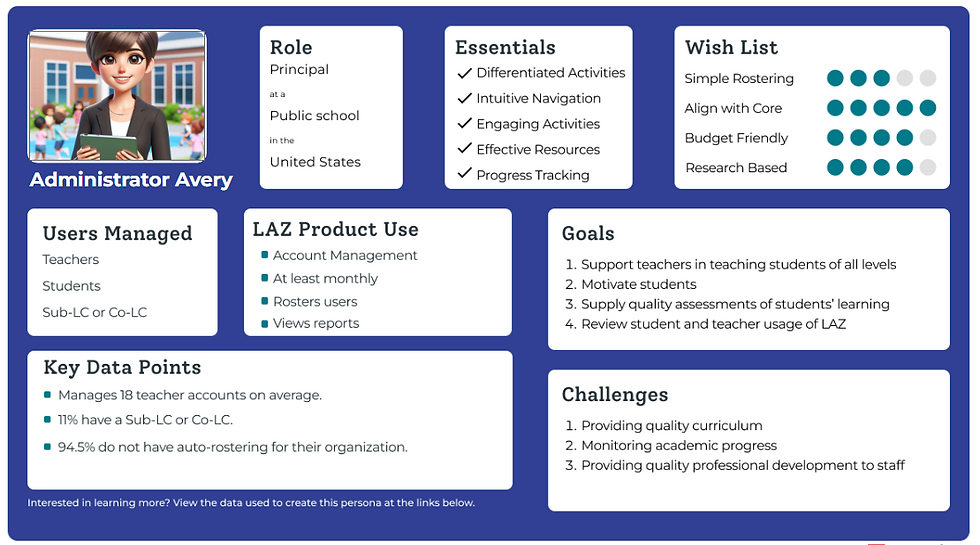
No one remembers “Mary the marketing-minded” as the Marketing Manager or “Paul the personable one” as the Customer Support persona. We shifted the focus from trying to make names memorable to emphasizing the role itself. Each persona was labeled with their functional role plus a simple name, Administrator Avery, Teacher Taylor, Student Sam, and so on. This made it easy to reference them in meetings, documentation, and design discussions. In practice, if someone forgets the name, they can simply say “Admin,” and everyone immediately knows who they mean. In fact, this happens naturally, people often refer to personas by their role rather than by a crafted name.
Bullets Over Paragraphs
Lengthy bios rarely get read. Teams want concise, actionable information they can apply to their work. We replaced paragraphs of text with bullets that highlight the essentials:
Wish List with the software: What the user wishes for within the software.
Goals: What they want to achieve in the system.
Challenges: Common frustrations or blockers.
Key Data Points: What this persona is doing in our software. Links are also included to more in-depth data for easy access should someone want additional data
Product use: where they are currently in the software ecosystem.
This format ensures that anyone, whether designer, developer, or product manager, can quickly absorb the key insights and make design decisions without wading through prose.
Focus on Users, Not Customers
One of the most important changes we made was separating users from customers. At Learning A-Z, the customer is defined as the person or organization that pays the money, which is only a small percentage of the total users, such as some administrators or teachers. Most personas, like students or parents, could never be customers. By focusing on the actual users of the software, we gained a clearer understanding of workflows, pain points, and opportunities for improvement, leading to designs that truly support the people doing the work. When user engagement and satisfaction increase, customer renewal and retention also increase.
Making Personas Useful
Our revised approach makes personas more practical and impactful:
Use role-based labels instead of names – Everyone knows who “Teacher” is; few remember “Alice the academic.”
Stick to bullets – Highlight only actionable insights that influence design decisions.
Focus on users, not customers – Ensure design decisions are informed by those interacting with the product daily.
By cutting the fluff, we transformed personas from static artifacts into living tools that actually guide our work. They’re easy to reference, easy to understand, and most importantly, they help teams design better experiences.
Follow this link to see actual Learning A-Z Personas